The Nissan Juke was never supposed to make sense. That was its entire appeal. When it first arrived, it didn’t follow proportions, didn’t follow taste, and definitely didn’t follow logic. It was awkward, slightly overdone, and completely unapologetic, but somehow, that worked. Now, as the Juke steps into the electric era, Nissan is trying to redesign it into a crossover. It’s trying to translate that same irrational charm into a world that has become far more calculated. And that’s where things get interesting.
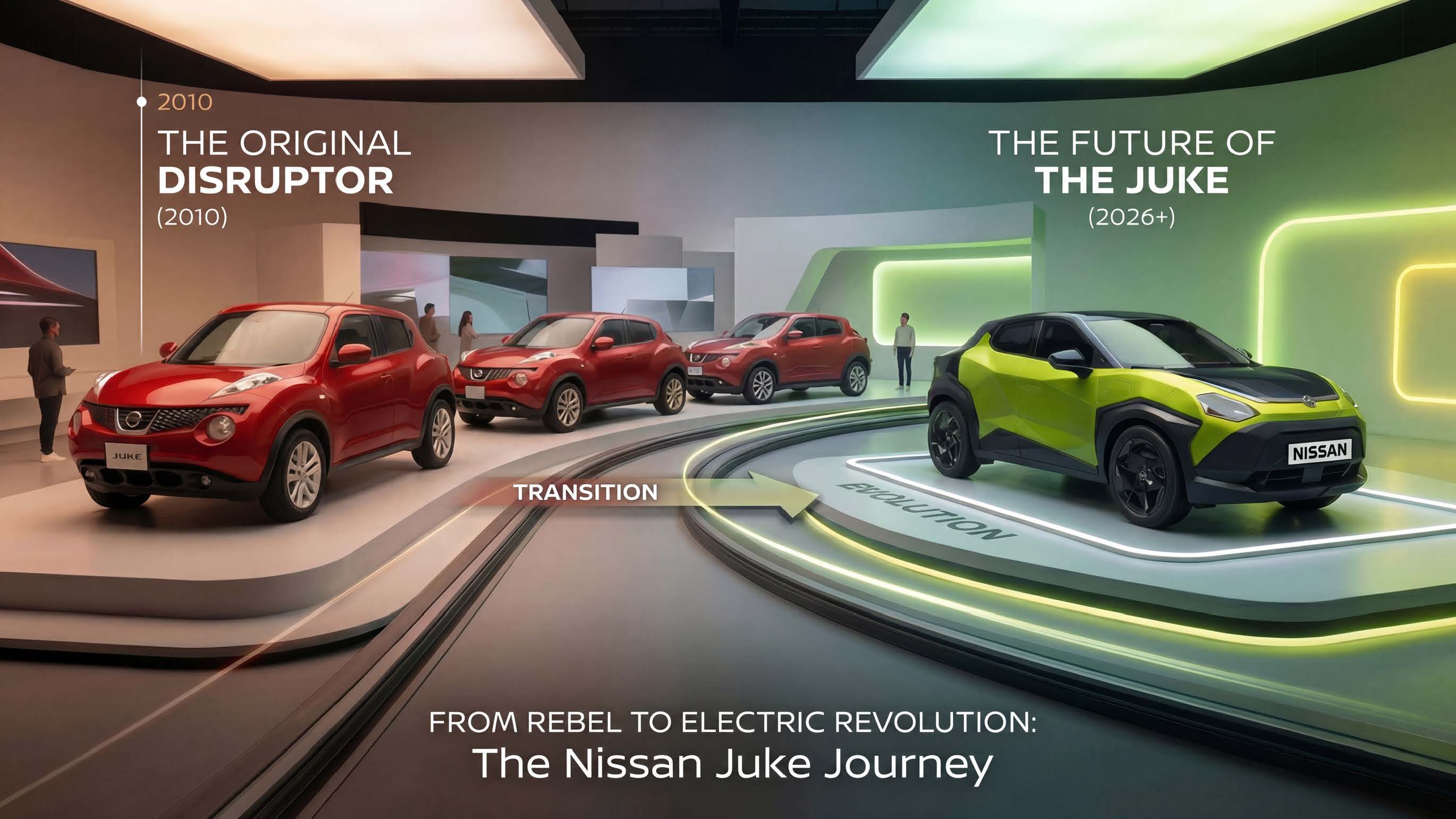
The all-new Nissan Juke 2026 marks a turning point for Nissan’s identity in Europe. For the first time, the Juke becomes fully electric, moving onto the CMF-EV platform and joining the brand’s growing EV line-up. But the real story isn’t the powertrain. It’s the design.
A Shift in Design Language: From Organic to Engineered
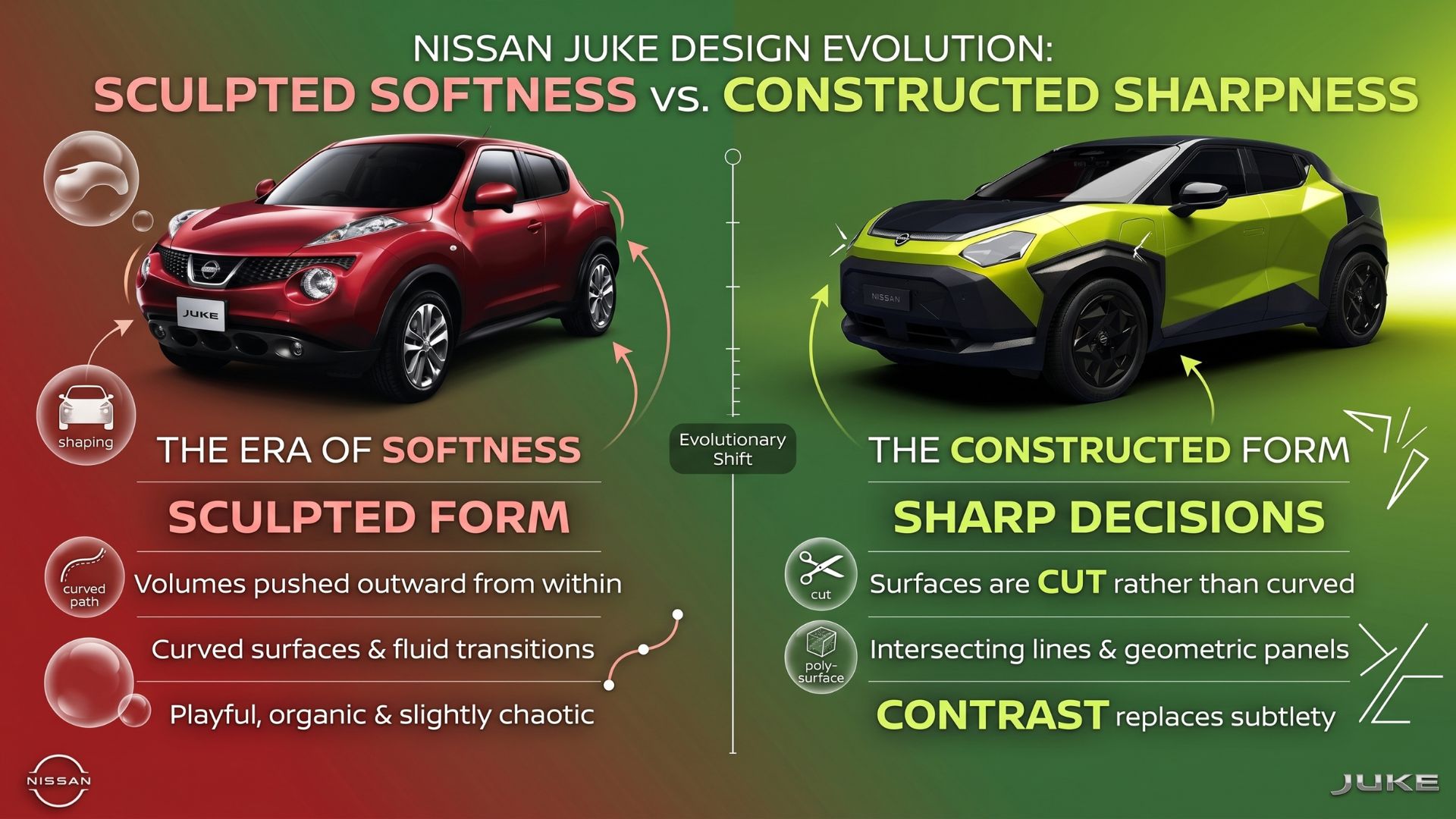
The most immediate change is not the technology but it’s the way the car has been designed. Earlier generations of the Juke relied on softness. The volumes felt inflated, almost as if the car had been pushed outward from within. Surfaces were curved, transitions were fluid, and the overall impression was playful, even slightly chaotic but this new Juke is the opposite.
It doesn’t feel sculpted rather it feels constructed. Almost as if the design has been assembled from sharp decisions rather than shaped from a single idea. Surfaces are cut rather than curved, lines intersect instead of flowing, and contrast replaces subtlety.
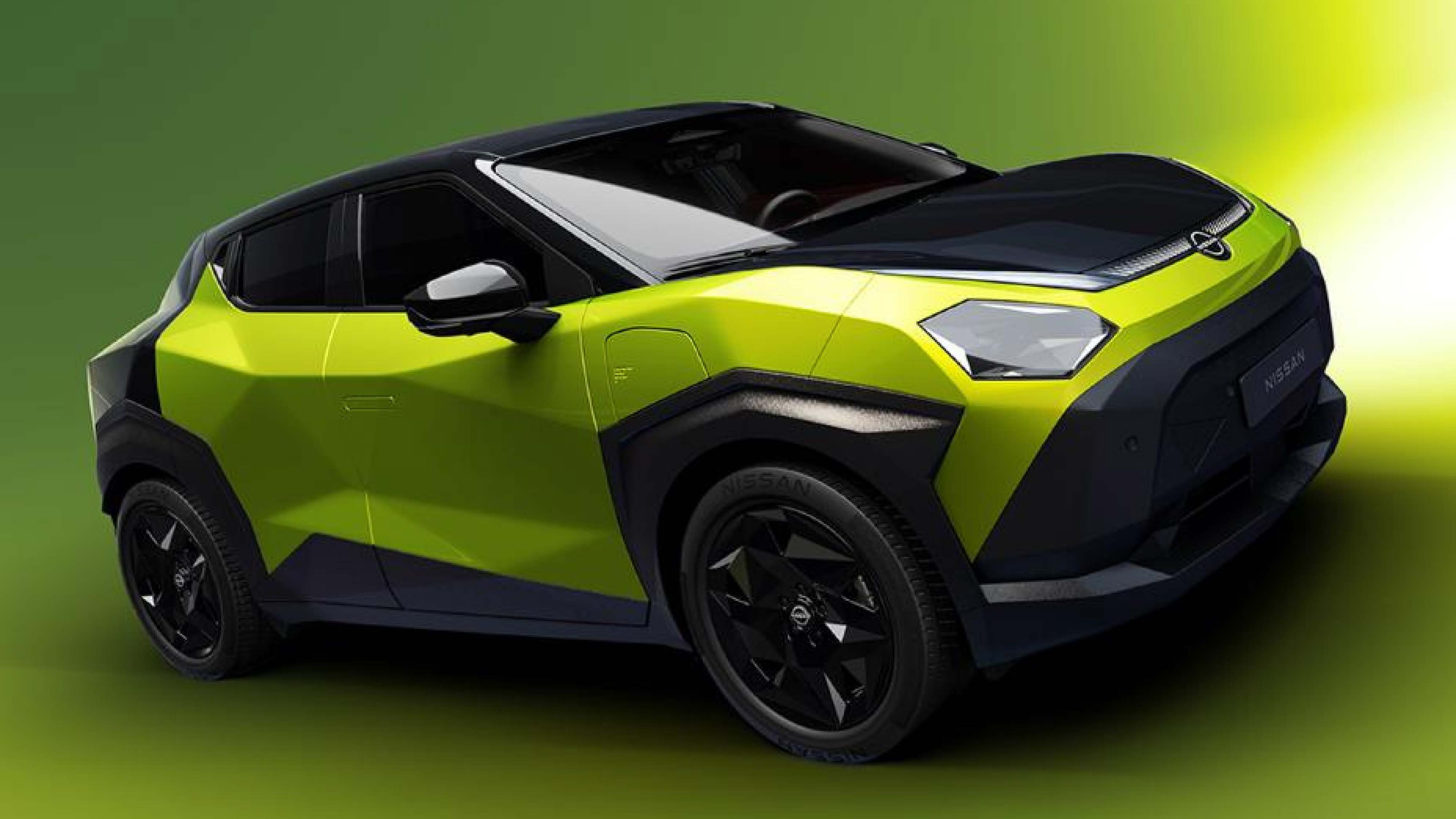
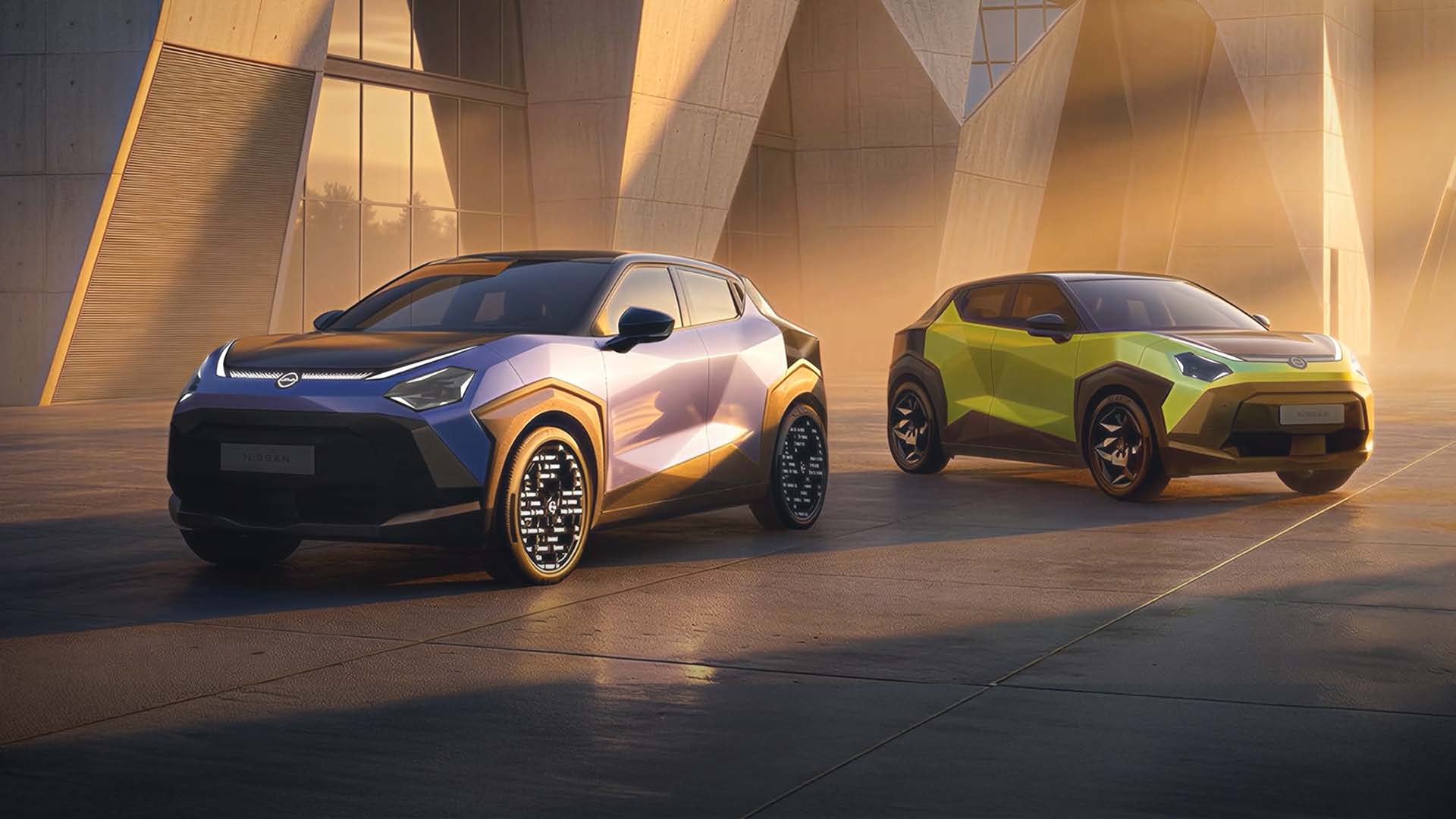
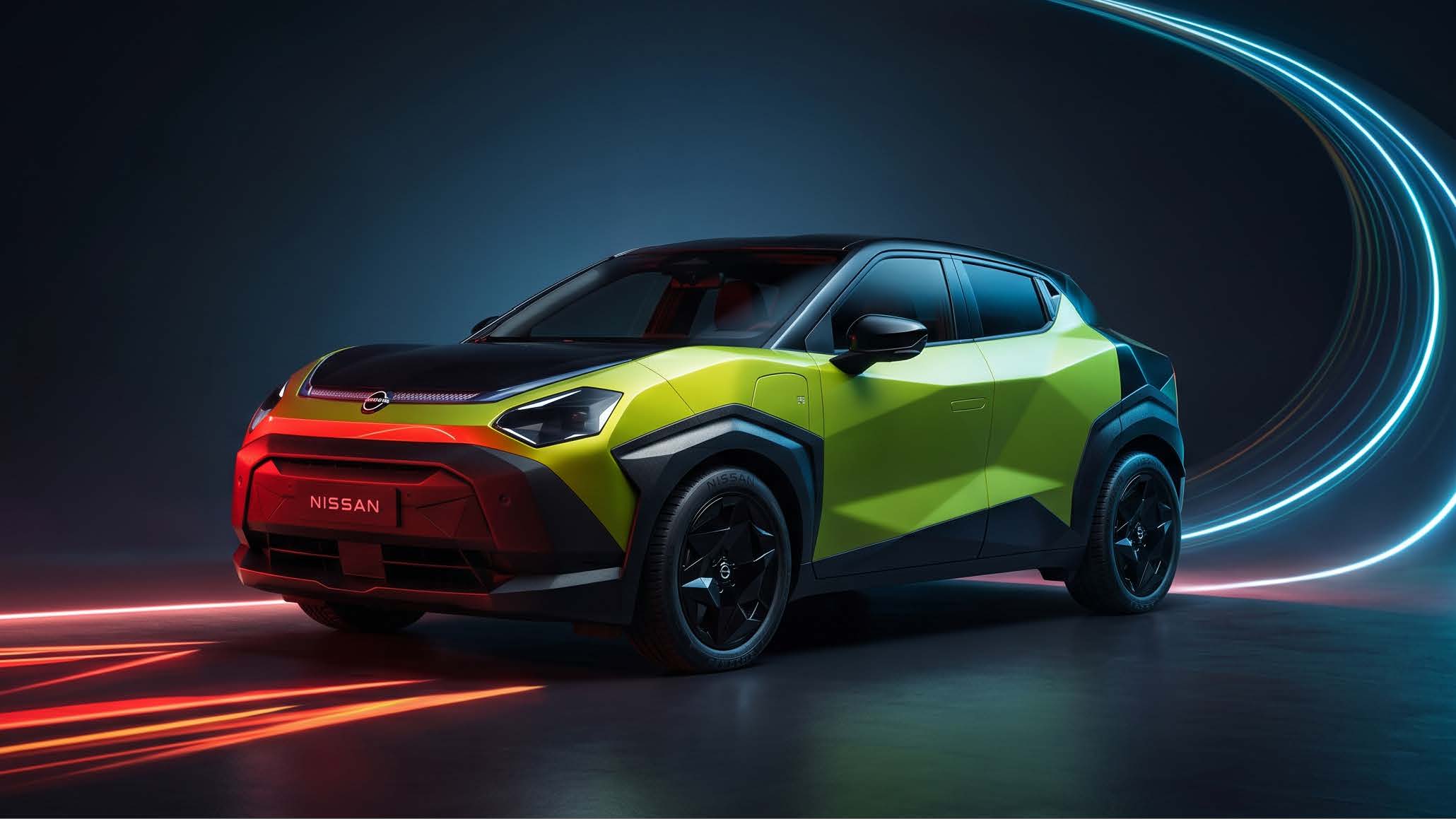
Despite the shift in surface language, the Juke retains its compact footprint, and that remains one of its strongest assets. The stance of this new Juke is confident. Short overhangs, relatively large wheels, and a slightly elevated ride height give it the presence expected from a crossover, without pushing it into bulkier territory. But what stands out most is how the body is visually split. The upper section is defined by the lime green surfaces, which feel tight and controlled. The lower section seems to be dominated by black cladding, which carries significantly more visual weight. This contrast creates tension, giving the car a planted stance, but it also introduces imbalance. At certain angles, the lower half begins to dominate. The arches feel almost exaggerated, pushing the design toward toughness while slightly overwhelming the refinement above.
The Design Feels Resolved In The Nissan Juke 2026
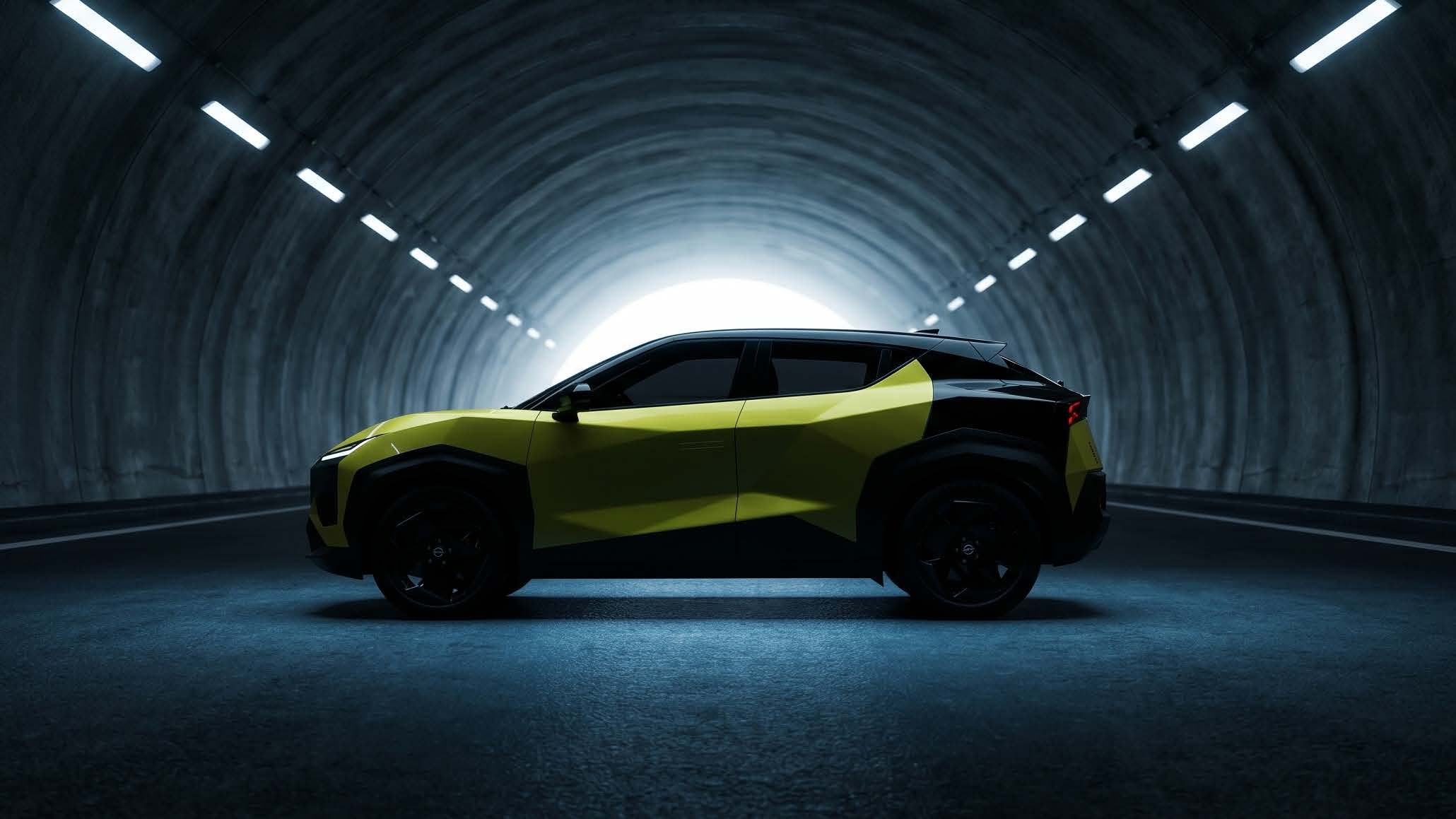
When viewed from the side, the new Juke finds clarity. This is where the design feels most confident and least conflicted. The faceted surfacing on the doors introduces a rare sculptural quality in this segment. Rather than relying on smooth reflections, the surfaces create sharp transitions of light and shadow, giving the car a sense of movement even when stationary. It’s a technique more commonly seen in concept cars than production vehicles, and here it elevates the Juke beyond the typical compact crossover.
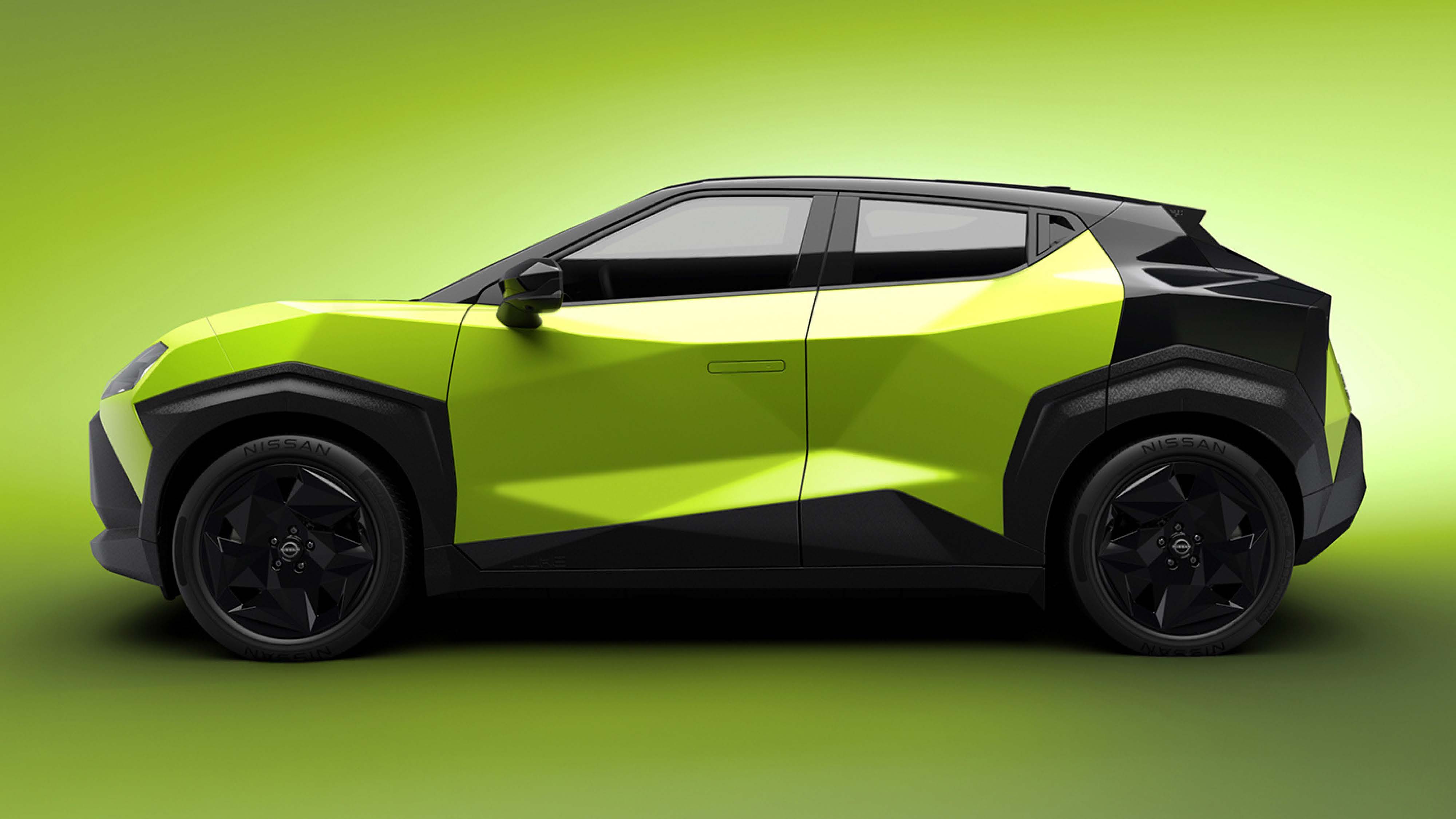
Also, there is a discipline in the way volumes are managed. The roofline flows cleanly, the glasshouse remains compact, and the silhouette avoids unnecessary complexity. If the rest of the car had followed this level of restraint, the design might have felt more cohesive.
The front of the Nissan Juke EV signals a clear departure from the past. Gone is the playful, almost cartoon-like face. In its place is a more technical composition, defined by slim lighting elements and sharper, more angular forms. The bonnet appears to sit over a darker lower section, creating a layered, mask-like effect that adds depth. The front works, but it doesn’t fully relax. It feels like it’s trying to look tough, futuristic, and technical all at once, and in doing so, it loses a bit of the lightness that made earlier Jukes feel approachable. It’s not wrong, but it’s not completely at ease either.
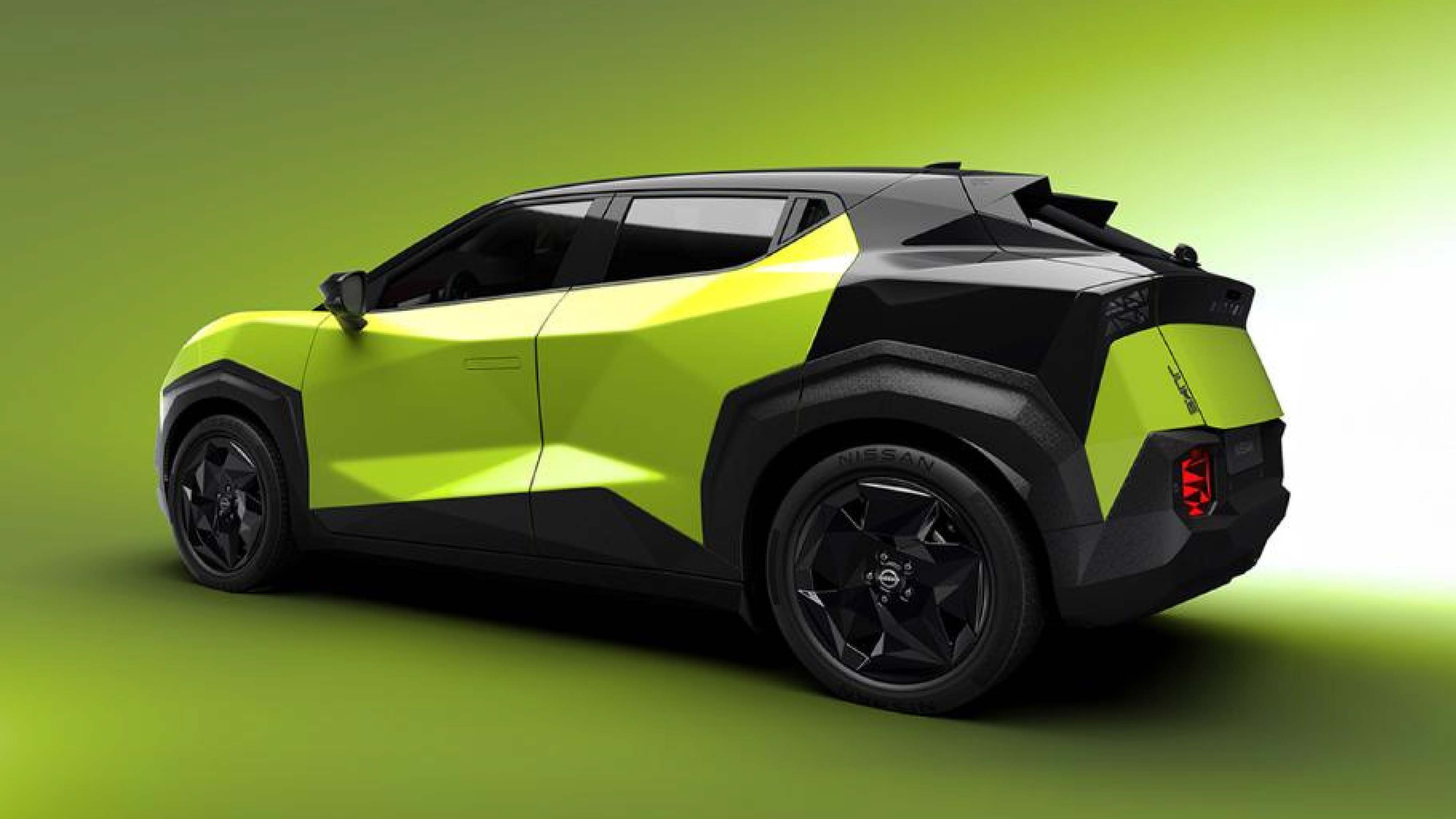
If the side profile is disciplined, the rear moves in the opposite direction. This is where Nissan pushes the design into more experimental territory. The surfaces become more complex, the contrast between materials more pronounced, and the lighting arrangement less conventional. Vertical lighting elements positioned low in the bumper break away from the horizontal themes that dominate the EV landscape. This is where the Juke stops negotiating and just commits. There’s no attempt to simplify, no effort to clean things up for the sake of elegance. It’s layered, complex, and slightly chaotic and depending on who you ask, that’s either its biggest strength or its biggest flaw. So now it’s up to you to decide!
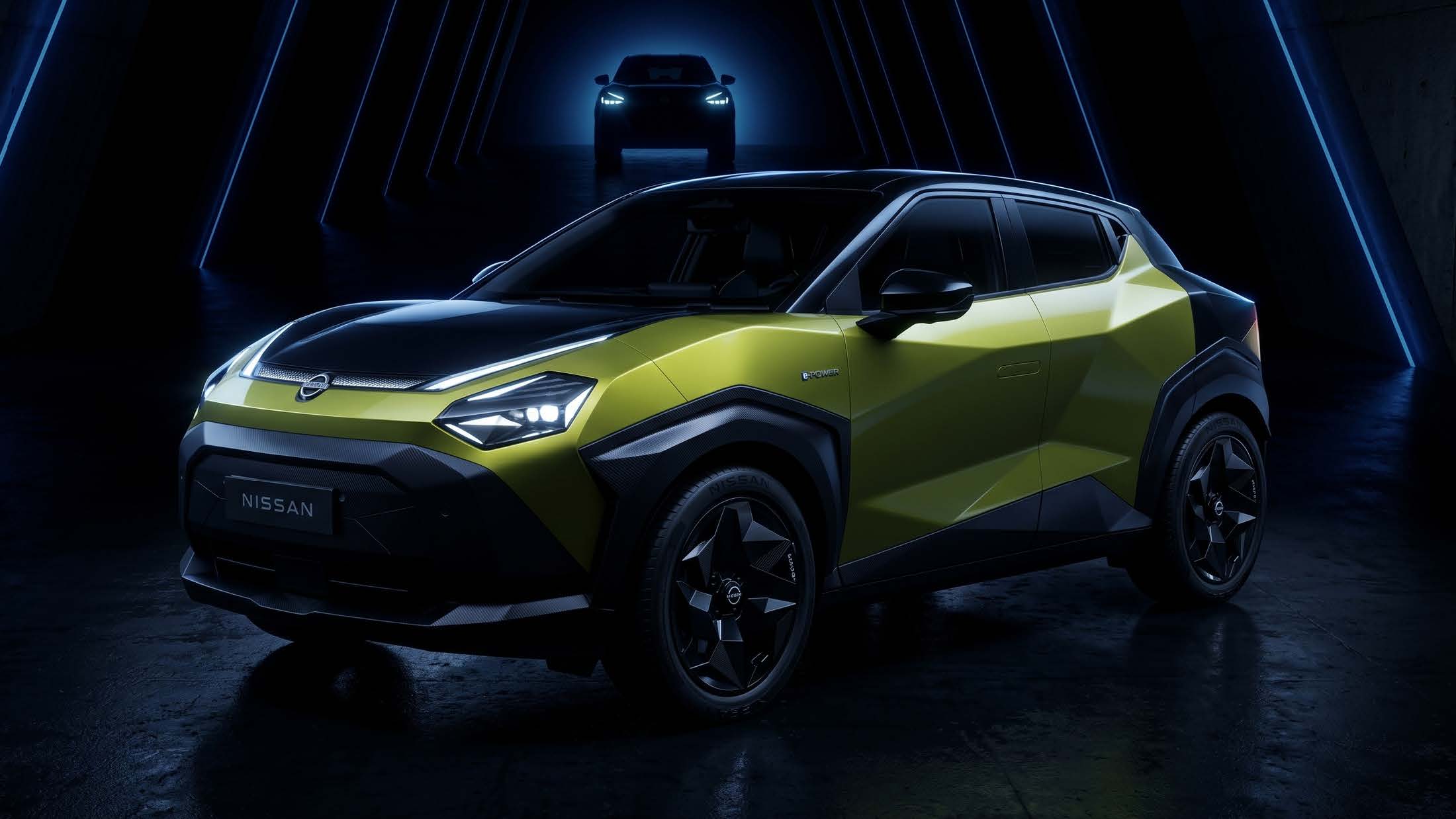
The most interesting shift is not in the details, but in the overall character. The original Juke was bold in a spontaneous way. It felt like a sketch that made it to production without losing its raw energy. This new version is bold in a more calculated manner. Every line, every surface, every contrast feels intentional which makes it more mature and maybe slightly less approachable. The bright lime colour plays a crucial role in holding onto some of that original spirit. Without it, the design could easily feel too serious. So yes, it is still a Juke but a very different kind.
What This Means for Nissan’s Design Direction
What’s happening here doesn’t feel isolated. It feels like direction. We all know that Nissan has explored expressive forms before, from the exaggerated early Juke to the smoother surfaces of the Nissan Ariya. But this new Juke replaces fluidity with structure. Edges are sharper. Transitions are tighter. Contrast is doing more work than form. This suggests a shift toward a more graphic, almost digital design language where precision defines identity.
The real question is not whether this works today. It’s whether Nissan can control this language before it starts controlling them.
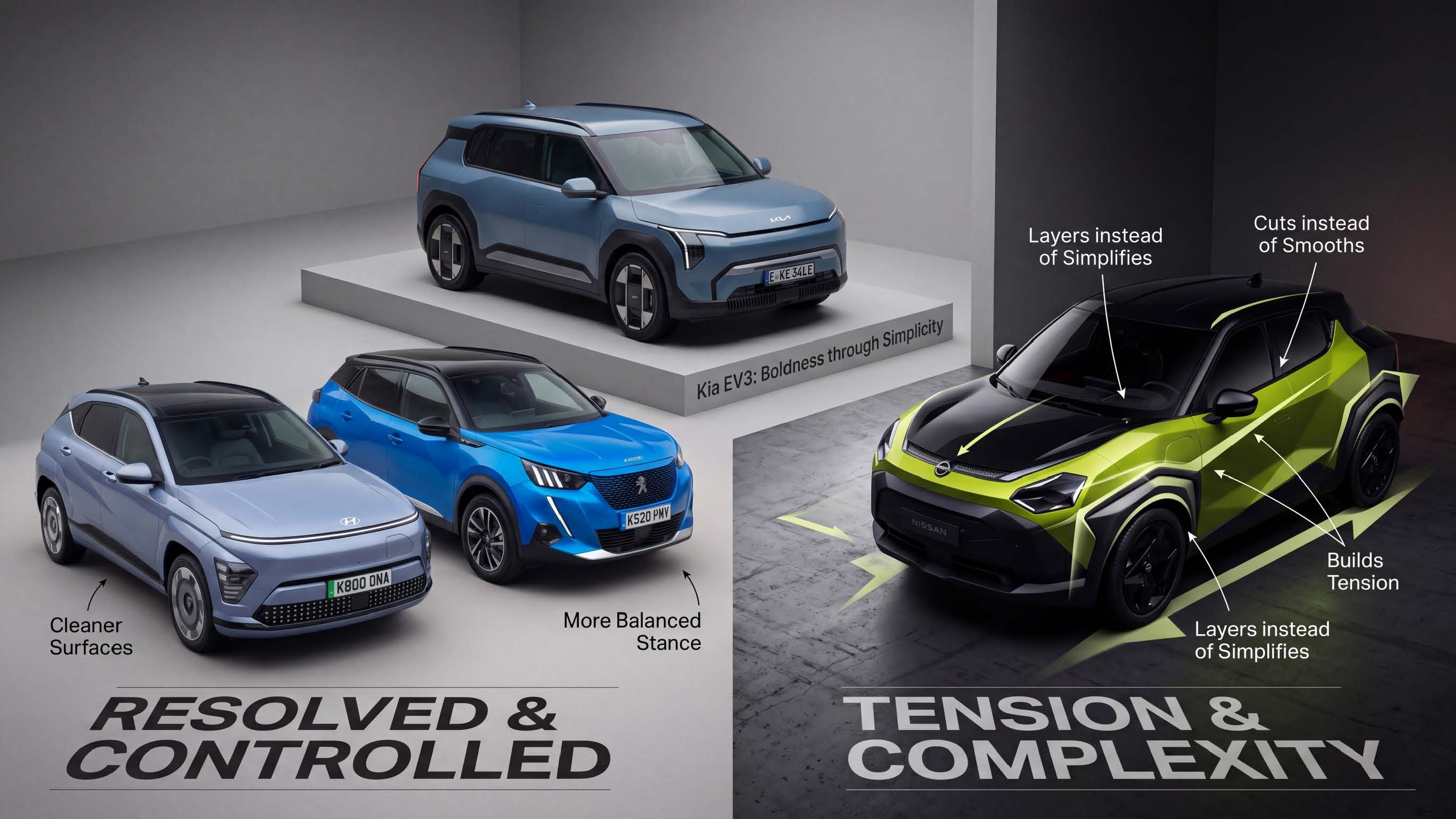
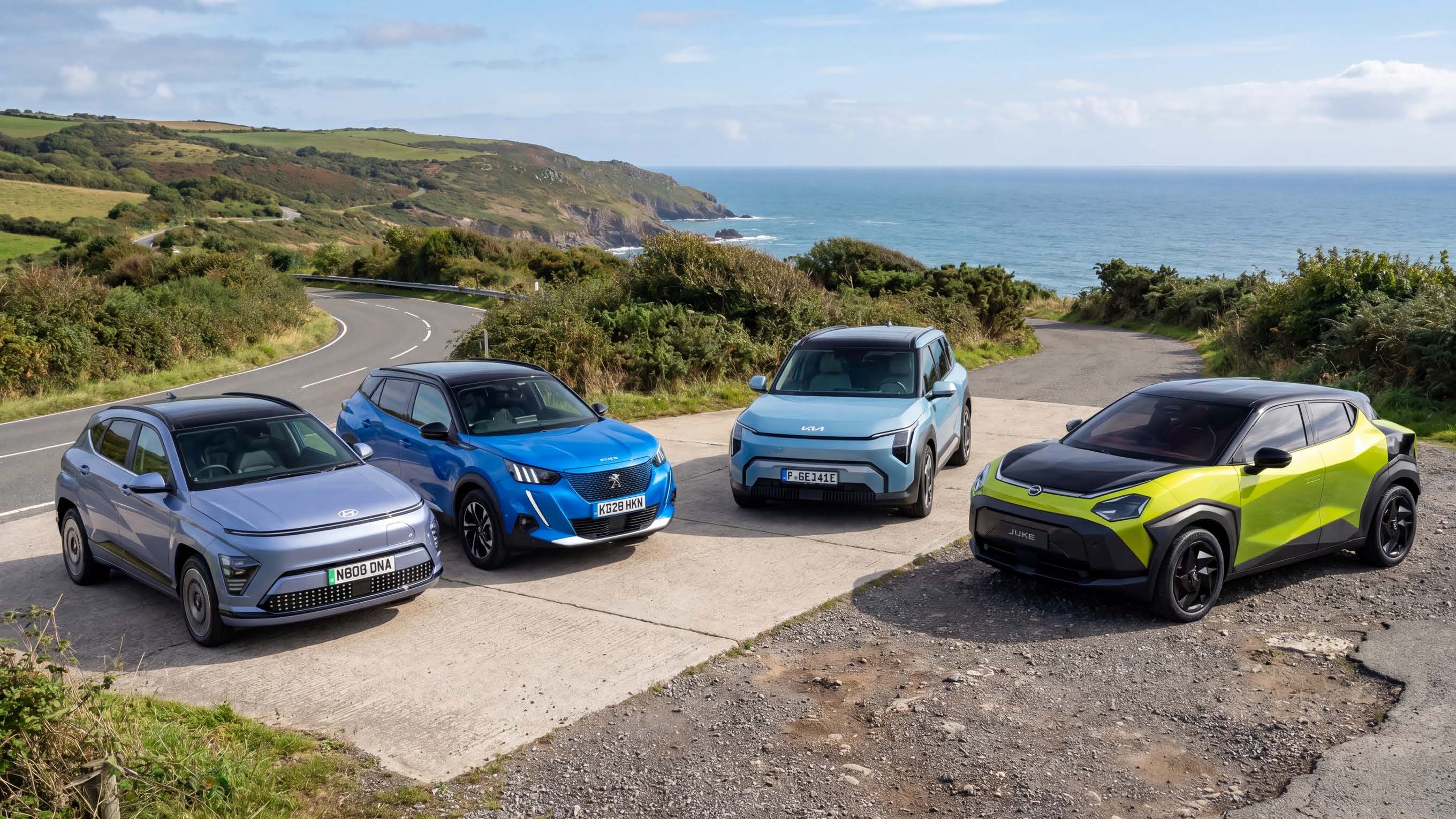
We all know that the compact EV crossover space is getting crowded, but visually, you can almost predict. Cars like the Hyundai Kona Electric and Peugeot e-2008 feel resolved. Their surfaces are cleaner, graphics are more controlled, and the stance is much more balanced. Then there’s the Kia EV3, which explores boldness through simplicity rather than complexity, but the Juke takes the opposite route. It layers instead of simplifying. It cuts instead of smoothing. It builds tension instead of resolving it.
Most of its rivals feel resolved. The Juke doesn’t, and that’s exactly why you notice it.
Will This Design Age Well?
This is where things become less certain. Designs built on softness tend to age quietly. Designs built on sharpness tend to age faster because they are tied more closely to visual trends, and the new Juke sits firmly in that second category. Its faceted surfaces, strong contrast, and graphic tension feel very current. But that also means they risk feeling over-styled as trends inevitably shift. This isn’t the kind of design that fades gracefully. It’s the kind that either becomes iconic or gets left behind very quickly.
Its production in Sunderland reinforces its importance not just as a product, but as part of a wider EV ecosystem, with a launch expected around spring 2027. The new electric Nissan Juke doesn’t feel like a car that wants universal approval. If anything, it feels deliberately unresolved in places as if Nissan understands that perfection isn’t what built the Juke’s identity in the first place. It’s sharper, heavier, more calculated. But it still carries a certain defiance. It still resists being smoothed out, simplified, or made predictable. And that’s rare now. Because in a market full of electric crossovers trying to look “right,” the Juke is one of the few that’s comfortable being slightly opposite.
And that might be exactly why it still works.
